Staff Writer
Kariya, Japan: DENSO Corporation has announced the development of a new generation of electrification products designed to enhance the efficiency, performance, and practicality of electric vehicles. The innovations—an advanced inverter, a cell supervising circuit, and a shunt current sensor—will be installed in the new Toyota bZ4X and future models. The new components are aimed at improving driving range, accelerating performance, and reducing charging time. They are also expected to contribute to cost reduction and compact vehicle design, key priorities in the growing EV market.
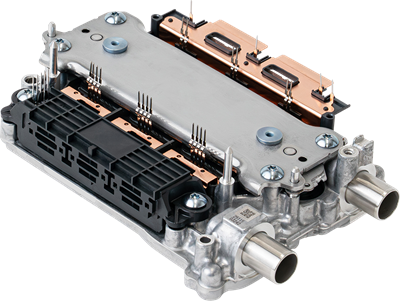
New Flat Dual-Sided Cooling Inverter
At the heart of the new lineup is an inverter, a crucial component that converts DC power from the battery into AC power to drive the motor. To meet rising expectations for higher output and space efficiency, DENSO developed a flat dual-sided cooling inverter using its proprietary semiconductor and cooling technologies. The inverter achieves world-leading power density, offering up to 70% lower power loss and a 30% smaller core module compared to the company’s previous silicon-based models. It uses SiC (silicon carbide) power semiconductors developed through DENSO’s proprietary 3D structure technology, which achieves the world’s lowest on-resistance for reduced energy loss.
DENSO also optimized the inverter’s heat dissipation structure using elliptical pin fins, improving cooling efficiency by about 40%. Combined with its double-sided cooling design, the system supports high current output while maintaining a compact form.
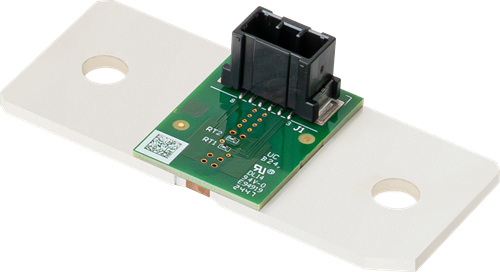
Smarter Battery Management
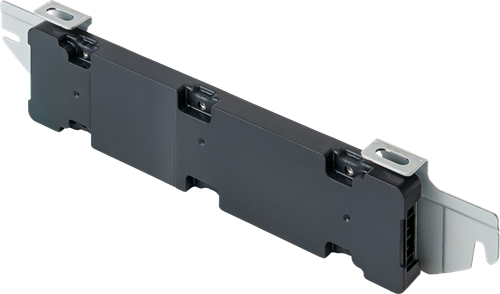
To enhance battery monitoring, DENSO has also introduced two key products: a Cell Supervising Circuit and a Shunt Current Sensor. Both have been developed to ensure safe, stable, and cost-efficient battery operation—critical for long-lasting, fast-charging EVs. The Cell Supervising Circuit employs the world’s first 28-channel cell voltage monitoring IC, which reduces the number of monitoring circuits by 20%. DENSO applied its proprietary high-voltage semiconductor process and optimized the circuit layout to reduce noise and component count, ensuring both safety and affordability.
The Shunt Current Sensor uses a shunt resistor method for high-accuracy current detection. To counter variations in resistance caused by temperature and material differences, DENSO created a new correction logic that maintains precision using minimal temperature data. This innovation has halved detection errors compared to previous products, while helping reduce charging time and production costs.
Towards Carbon Neutrality
DENSO said it will continue to integrate and refine these elemental technologies to support the global transition toward carbon neutrality. The company’s focus remains on improving the practicality of electric vehicles by advancing efficiency, performance, and affordability. “By combining semiconductor, cooling, and monitoring innovations, we aim to make EVs more accessible and sustainable,” DENSO said in its announcement.