Staff Writer
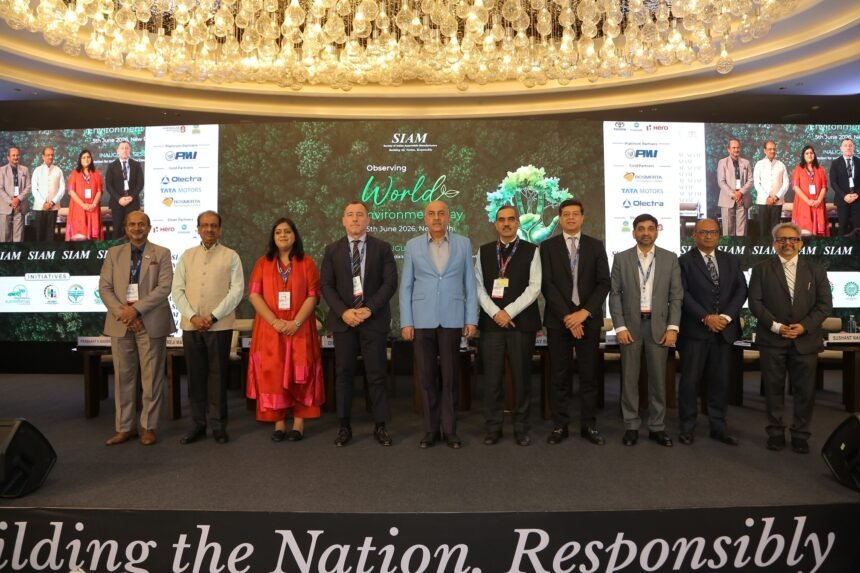
New Delhi: The Indian automobile industry on Friday reiterated its commitment to climate responsibility and sustainable mobility, with policymakers and industry leaders calling for accelerated adoption of low-carbon technologies, cleaner fuels and electric vehicles to support the country’s transition towards a net-zero future.
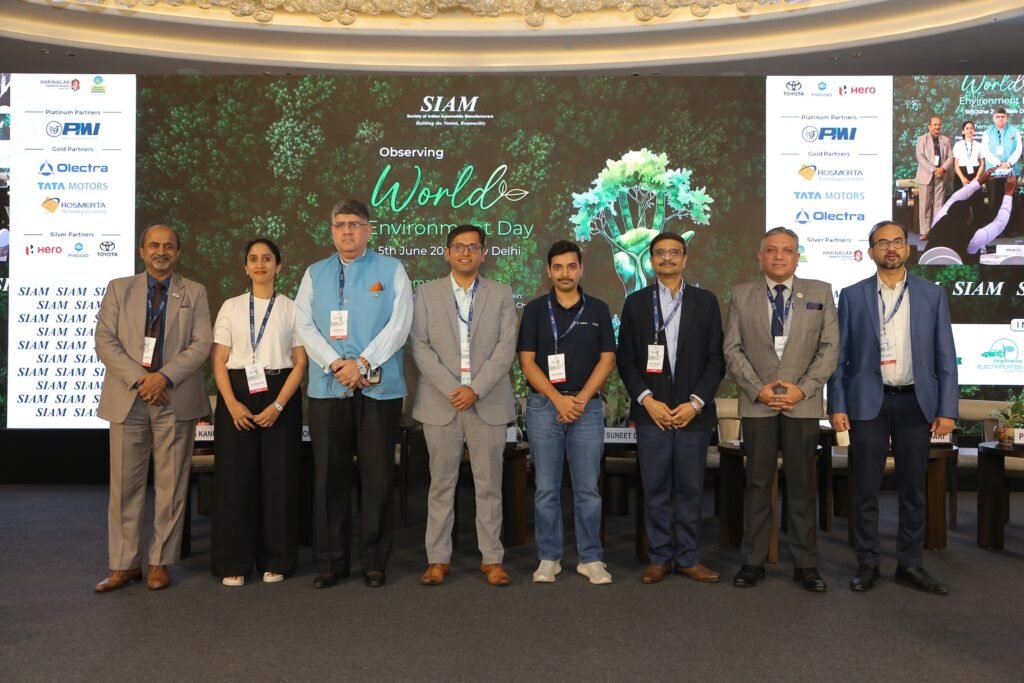
The discussions took place at the sixth International Conference on “Climate Action: Accelerating India’s Transition to a Low-Carbon Future”, organised by the Society of Indian Automobile Manufacturers (SIAM) on the occasion of World Environment Day.
Addressing the conference, Prime Minister’s Advisor Tarun Kapoor said the transport sector must play a central role in strengthening India’s energy security and reducing dependence on imported fuels. He stressed the need for faster electrification of passenger vehicles while highlighting the country’s efforts to promote multiple clean-energy pathways, including biofuels, ethanol blends, compressed biogas, green hydrogen, LNG, CNG and synthetic fuels.
Kapoor said India was also exploring coal gasification-based fuel alternatives as part of a broader strategy to diversify domestic energy sources and achieve cleaner mobility outcomes.
National Green Hydrogen Mission Director Abhay Bakre said technology adoption should be viewed from a long-term perspective rather than current costs alone, noting that scale and wider deployment would eventually bring down costs. He underscored the importance of simultaneous development of vehicle and charging infrastructure ecosystems and described domestic fuel-cell manufacturing as a potential game changer for the automotive industry.
SIAM Executive Director Prashant K. Banerjee said India had already demonstrated significant progress in sustainable mobility and remained well-positioned to address challenges arising from climate change, air pollution and energy security concerns. He said the industry would continue supporting the government’s decarbonisation agenda through innovation and responsible manufacturing practices.
Industry leaders participating in the conference highlighted the need to integrate sustainability across the automotive value chain through cleaner production processes, resource efficiency, circular economy principles and the adoption of alternative fuels.
Hero MotoCorp Chief Executive Officer Harshavardhan Chitale said sustainability must be embedded throughout industrial operations, including water conservation, waste reduction, product recyclability and green retail networks. He added that electric vehicles, flex-fuel technologies and alternative fuels would play an important role in reducing emissions.
Piaggio Vehicles Chairman and Managing Director Diego Graffi said the rapid growth of electric three-wheelers demonstrated the speed at which sustainable mobility solutions could be adopted in India. He noted that the segment had emerged as a practical and reliable transportation option and would continue to contribute significantly to the country’s mobility ecosystem.
Olectra Greentech Managing Director Mahesh Babu said strengthening public transportation systems would be critical for achieving India’s development ambitions while simultaneously reducing emissions and dependence on imported oil. He emphasised the need for economically viable solutions to encourage large-scale adoption of clean mobility technologies.
PMI Electro Mobility Solutions Chief Executive Officer Aanchal Jain said electric buses were leading the transformation of public transport in India and could play a major role in lowering emission intensity. She stressed the need to translate sustainability ambitions into measurable outcomes.
The Automotive Research Association of India Director Reji Mathai said India’s progress in electric mobility demonstrated the effectiveness of supportive policies and industry participation. However, he added that the country should continue exploring a broader range of low-carbon fuel technologies while strengthening research collaboration and data-driven policymaking.
Bharat Petroleum Corporation Director (Marketing) Subhankar Sen said the success of India’s ethanol-blending programme had attracted global attention and highlighted the importance of a technology-neutral approach supported by infrastructure development, policy support and consumer awareness.
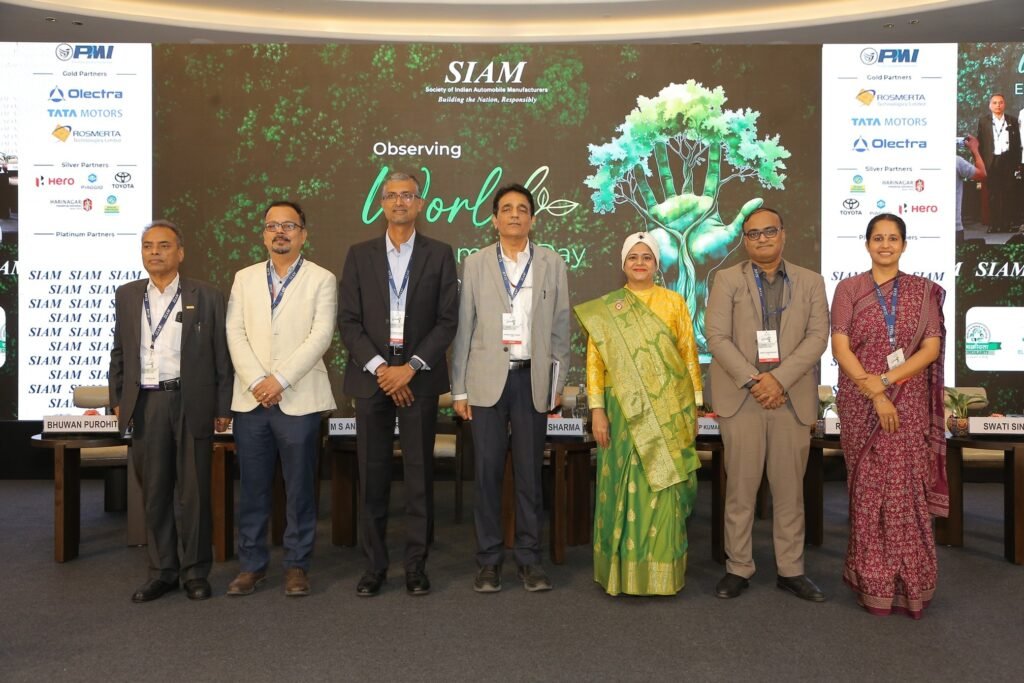
The first thematic session on “Circularity in the Automotive Sector: From Materials to End-of-Life Vehicles” highlighted the growing importance of resource efficiency, sustainable sourcing, recycling and responsible management of end-of-life vehicles. Addressing the session, Guest of Honour Dr. Virender Sharma, Member Technical at the Commission for Air Quality Management, stressed the need for stronger circular economy frameworks to reduce environmental impact and improve resource utilisation.
Chaired by M.S. Anand Kumar of TVS Motor Company, the session featured experts from industry and academia who discussed sustainable technologies, Extended Producer Responsibility (EPR) frameworks and innovative approaches to material recovery. Speakers emphasised that improving recycling systems and increasing the recovery of critical materials would be vital for building a sustainable automotive ecosystem.
A panel discussion moderated by PwC Partner Sandeep Kumar Mohanty examined ways to strengthen collaboration among stakeholders to establish a more circular automotive value chain and improve efficiency in resource recovery and recycling operations.
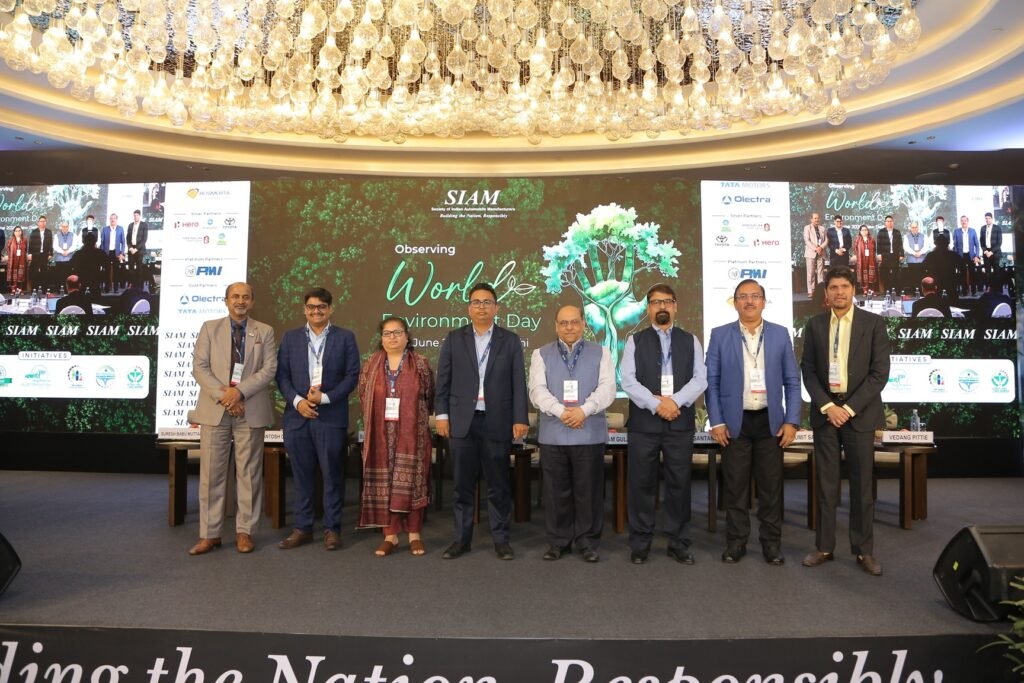
The second thematic session focused on alternate fuels and their role in reducing transport emissions while strengthening India’s energy security. Chaired by Vikram Gulati of Toyota Kirloskar Motor, the session explored emerging pathways including biofuels, agricultural residue-based fuels and hydrogen technologies.
Experts from the Global Biofuels Alliance, Chhattisgarh Biofuel Development Authority and Umagine Hydrogen outlined developments in low-carbon fuel solutions and highlighted their potential to complement electric mobility in achieving emission reduction targets.
During a panel discussion on multi-fuel pathways, participants stressed that India’s mobility transition would require a diversified energy mix supported by enabling policies, investment and infrastructure development. The discussion highlighted the role of biofuels, hydrogen and other alternative fuels in reducing dependence on fossil fuels while ensuring affordability and scalability.
The third thematic session on decarbonising the automotive value chain focused on reducing emissions across manufacturing facilities and supply chains. Chaired by Hero MotoCorp’s Suneet Deshmukh, the session featured presentations on critical minerals, copper demand, rare earth materials and sustainable sourcing practices required for the next generation of mobility technologies.
Industry experts discussed strategies for integrating renewable energy, improving manufacturing efficiency and creating resilient low-carbon supply chains. A panel discussion moderated by EY Parthenon Partner Pratik Shah explored the challenges and opportunities associated with green manufacturing and supply chain decarbonisation, with participants stressing the need for greater collaboration between manufacturers, suppliers and clean energy providers.
The conference concluded that India’s mobility transition must be driven through multiple complementary pathways, including electric vehicles, low-carbon fuels, circular resource management and sustainable manufacturing practices. Participants noted that the country’s size, diversity and energy requirements make a technology-neutral approach essential for achieving both environmental and economic objectives.
SIAM said it remains committed to supporting India’s target of achieving carbon neutrality by 2070 and the vision of a developed nation by 2047 through initiatives focused on vehicle electrification, ethanol adoption, recycling and circularity, safe mobility solutions, gas-based transportation and the development of a green hydrogen ecosystem.