Staff Writer
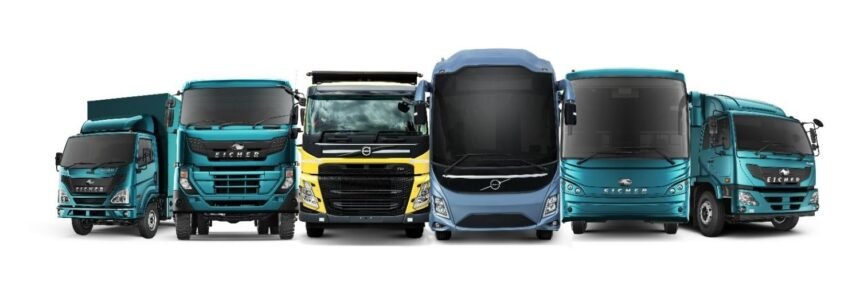
New Delhi: VE Commercial Vehicles (VECV) reported a steady rise in its overall sales for April 2026, registering a growth of around 6 per cent year-on-year, supported largely by robust performance in the domestic commercial vehicle segment.
The company said total sales, including electric vehicles, stood at 7,318 units in April 2026 as against 6,846 units in April 2025, reflecting a growth of about 6 per cent.
Sales of Eicher Trucks and Buses, including EVs, rose to 7,156 units during the month under review compared to 6,717 units in the same period last year, marking a 6.6 per cent increase.
Domestic sales remained the key growth driver for the company, climbing 8.6 per cent to 6,797 units in April 2026 from 6,257 units a year earlier. Within this, the small commercial vehicle (SCV) and light and medium duty (LMD) truck segment recorded a strong 17.9 per cent growth at 3,243 units, up from 2,750 units in April 2025.
Heavy duty (HD) trucks also posted healthy growth of 14.9 per cent, with sales rising to 1,516 units from 1,319 units in the year-ago period, indicating sustained demand in the higher tonnage category.
However, the bus segment showed a mixed trend. While LMD bus sales declined marginally by 2.5 per cent to 1,976 units from 2,026 units, HD bus sales witnessed a sharp drop of 61.7 per cent, falling to 62 units compared to 162 units in April last year.
On the exports front, VECV reported a decline of 21.3 per cent, with total overseas shipments at 362 units in April 2026 against 460 units in the corresponding month of the previous year. The SCV/LMD export segment fell 24.2 per cent to 226 units, while bus exports dropped steeply by 74.2 per cent to 32 units.
In contrast, exports of HD trucks surged significantly by 173.7 per cent to 104 units from 38 units a year ago, partially offsetting the overall decline in international markets.
Meanwhile, sales of Volvo Trucks and Buses rose 23.3 per cent to 159 units in April 2026 compared to 129 units in April 2025.
Overall, VECV’s performance in April reflects stable growth led by domestic demand, even as export markets and certain bus segments remained under pressure.