Staff Writer
New Delhi: Marking the occasion of World Environment Day, the Society of Indian Automobile Manufacturers (SIAM) hosted its 5th International Conference in New Delhi, bringing together government dignitaries, global experts, industry leaders, and sustainability advocates to discuss and promote a clean, circular future for the automotive industry. The conference, themed “Revolutionizing Mobility: Driving the Automotive Industry Towards a Clean and Circular Future”, served as a dynamic platform for dialogue, strategy sharing, and commitment toward sustainable mobility.
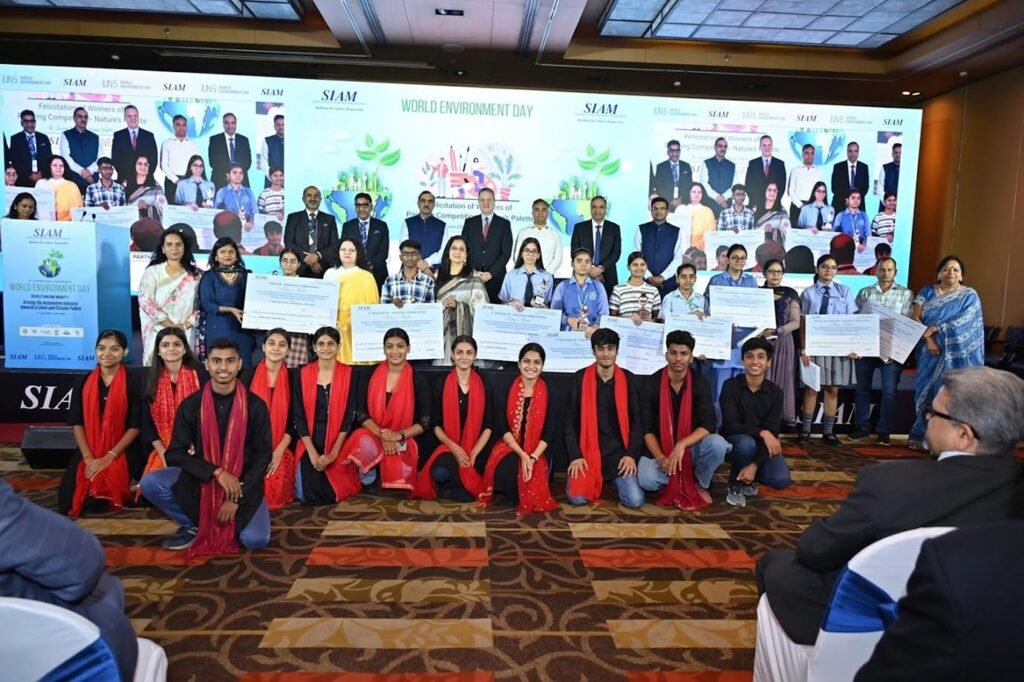
The event commenced with a cultural performance—a short yet impactful street play by students of Gyan Mandir Public School, Naraina Vihar. Their act addressed the urgent issue of plastic pollution and was met with resounding applause from the audience. This was followed by a felicitation ceremony for the winners of a student painting competition titled “Nature’s Palette,” organized as part of the World Environment Day celebrations. A total of nine students from schools across Delhi-NCR were honored for their creative expressions on environmental conservation.
The day-long conference was structured into four thematic sessions, each focusing on critical pillars of sustainable automotive development: responsible waste management, reduction of plastic footprint, innovations in tyre and oil recycling, and battery and e-waste recycling. These discussions spotlighted actionable strategies, emerging technologies, and global best practices that support India’s transition towards a circular economy.
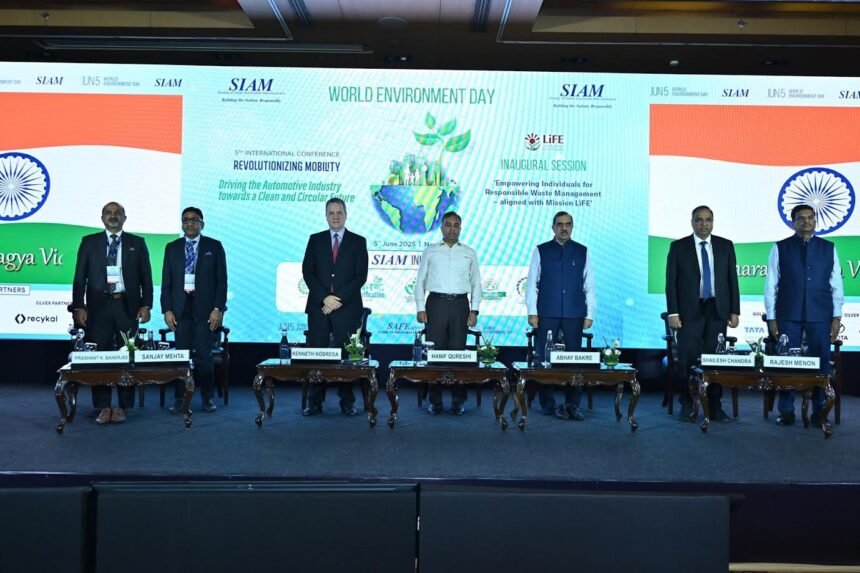
In the inaugural session titled “Empowering Individuals for Responsible Waste Management – Aligned with Mission LiFE,” speakers emphasized individual and community responsibilities in waste reduction. Delivering the opening address, Mr. Shailesh Chandra, President of SIAM and Managing Director of Tata Motors Passenger Vehicles Ltd. & Tata Passenger Electric Mobility Ltd., laid out a three-pronged approach to foster circularity. He highlighted the need for a robust policy framework encouraging OEMs to adopt lightweight technologies and manage vehicle lifecycles more efficiently. He also stressed the importance of incentivizing the scrappage of end-of-life vehicles through a network of 125 approved scrapping facilities—65 of which are already operational—and called for strengthened recycling infrastructure through joint industry-government initiatives.
The conference was further elevated by the presence of esteemed Guests of Honour. His Excellency Mr. Kenneth Nóbrega, Ambassador of the Federative Republic of Brazil, underscored Brazil’s commitment to the climate cause, particularly as it prepares to host COP30. He advocated for accelerating economic transformation through sustainable mobility, grounded in strong carbon accounting standards and policies that support recyclability, safety, and technological neutrality. He lauded India-Brazil collaborations in fostering green transportation and economic resilience.
Dr. Hanif Qureshi, Additional Secretary, Ministry of Heavy Industries, highlighted India’s achievements and ongoing initiatives in clean energy and sustainable mobility. He pointed to the 20% ethanol blending already achieved in India and the work of over 11 companies in developing flex-fuel engines. Among other key announcements, he spoke about a ₹500 crore electric truck program aimed at scrapping diesel trucks and incentivizing locally manufactured components. India’s rollout of 14,000 electric buses—the largest of its kind—along with hybrid and electric ambulances, reflects the government’s deep commitment to green mobility, he said.
Also speaking at the event, Mr. Abhay Bakre, Director of the National Green Hydrogen Mission, projected the emergence of hydrogen-powered vehicles on Indian roads by 2035. Citing SIAM’s leadership and OEMs’ dedication, he noted that 10 hydrogen refueling corridors have already been sanctioned to support decentralised access. He expressed optimism that within three years, the current 25–30% cost gap between diesel and hydrogen-powered transport could be bridged, paving the way for over a thousand hydrogen-powered trucks by 2030.
In his concluding remarks, Mr. Rajesh Menon, Director General of SIAM, reaffirmed SIAM’s commitment to environmental stewardship. He noted that World Environment Day serves as a reminder of collective responsibility towards nature, and reiterated SIAM’s resolve to advance cleaner powertrains and circular practices in the automotive sector.
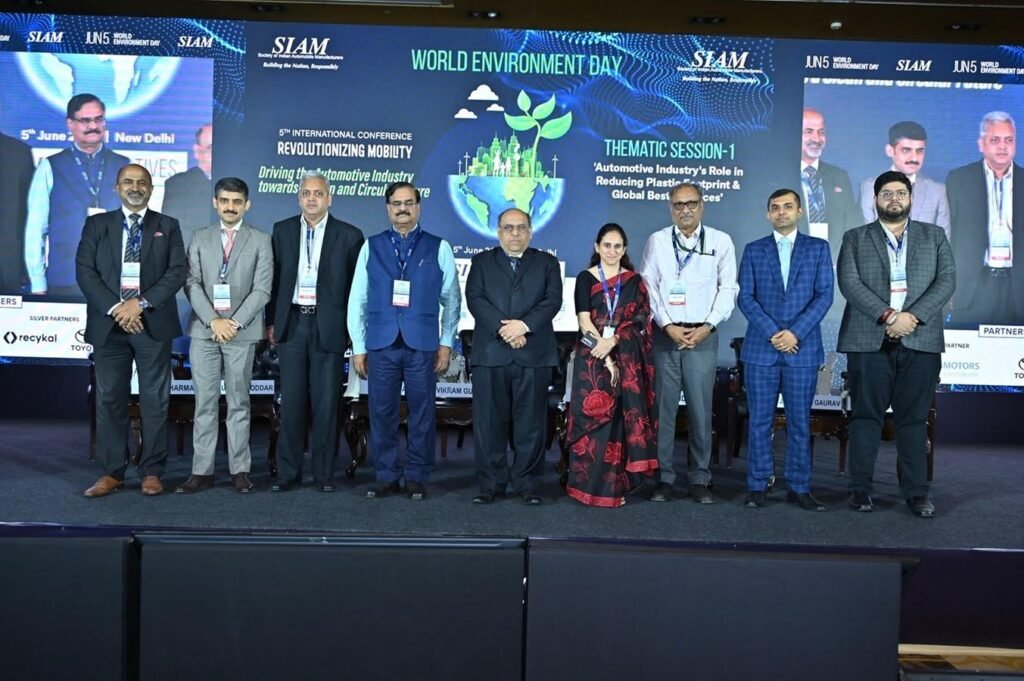
The first thematic session of the day focused on “The Automotive Industry’s Role in Reducing Plastic Footprint & Global Best Practices.” Chaired by Mr. Vikram Gulati, Chairman of SIAM Economic Research Group and Country Head & EVP – Corporate Affairs & Governance, Toyota Kirloskar Motor Pvt Ltd., the session saw dynamic participation from key voices in the field. Ms. Deepti Kapil, Additional Director, CPCB; Mr. Saurabh Poddar, Managing Director, Sellowrap Group; and Mr. Sahil Ghai, Vice President of Sustainability at Shakti Plastic Industries, presented pioneering solutions in biodegradable materials, bioplastics, and plastic waste management. Experts including Dr. S. K. Goyal (NEERI), Mr. Suneel Pandey (TERI), Mr. Jai Kumar (GIZ), and Mr. Ashim Sharma (NRI Consulting & Solutions) provided insights into integrating plastic into a circular economic model.
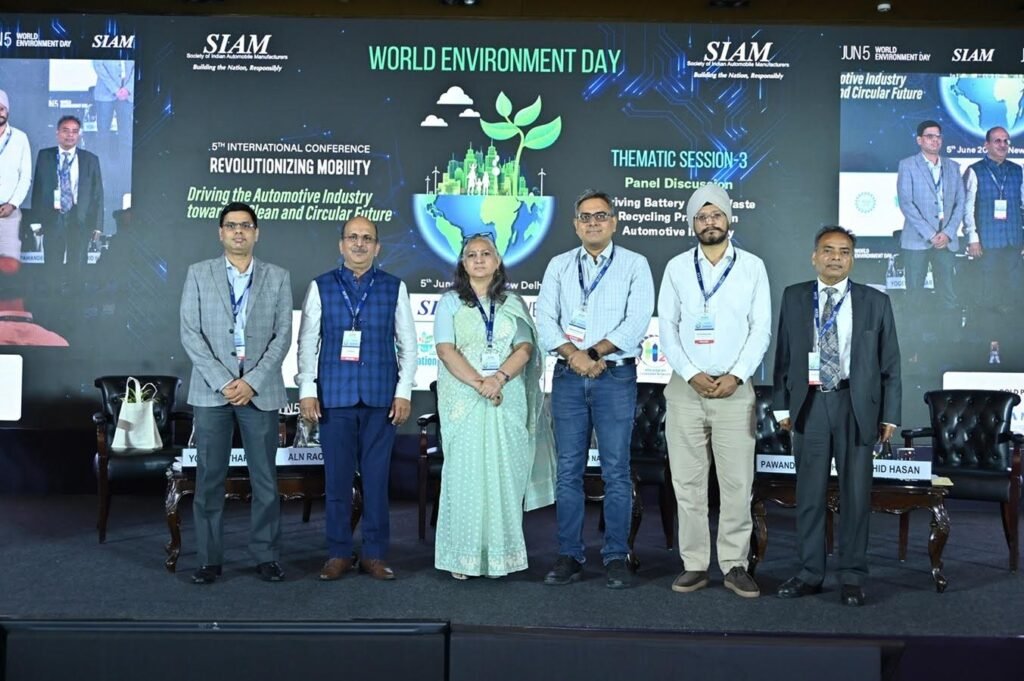
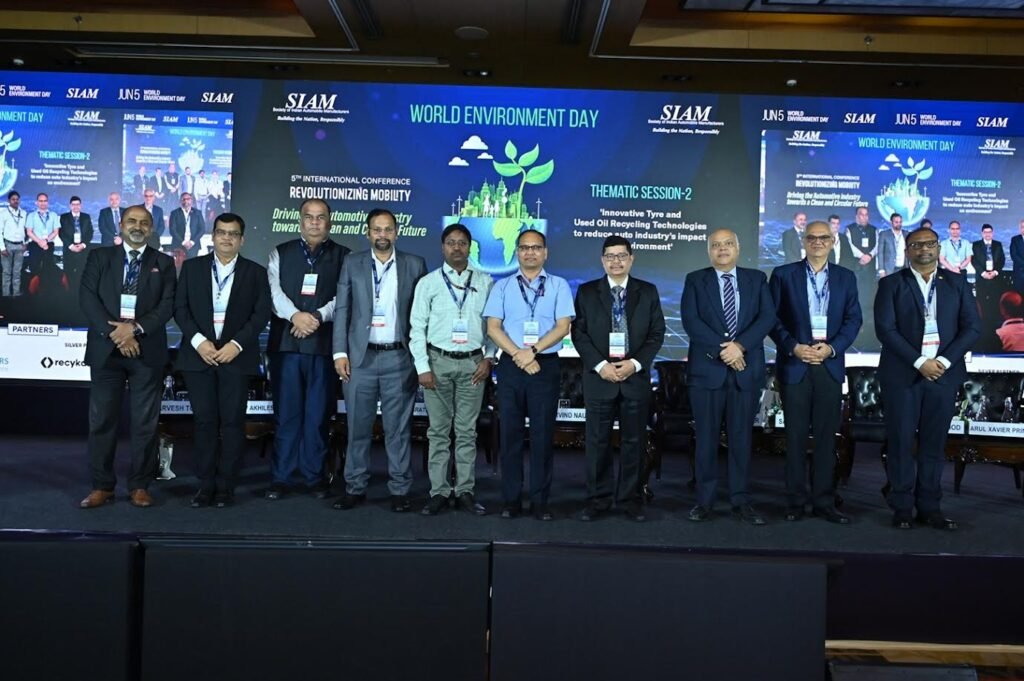
The second thematic session, titled “Innovative Tyre and Used Oil Recycling Technologies to Reduce Auto Industry’s Impact on Environment,” was chaired by Mr. Rajendra Petkar, Chairman of the SIAM Sustainable Mobility Group and President & CTO, Tata Motors. The session featured diverse perspectives from regulatory bodies, research organizations, and industry stakeholders. Speakers included Mr. Arvind Nautiyal, Member Secretary, Commission for Air Quality Management; Dr. Abhinav Akhilesh, Partner, Grant Thornton Bharat LLP; and Mr. Sharath Pallerla, Advisor, Ministry of Environment, Forest and Climate Change. Experts from ICAT, GRP Limited, Apollo Tyres, Bharat Petroleum Corporation Ltd., and Shell highlighted cutting-edge tyre recycling technologies and sustainable lubricant management practices.
In the third thematic session, “Driving Battery and E-Waste Recycling Practices in Automotive Industry,” Ms. Pamela Tikku, Co-Chairperson of SIAM Sustainable Mobility Group and Vice President & Head, Auto Group Public Affairs at Mahindra & Mahindra, led the conversation. Mr. Yogesh Thakar, Director at PwC India, opened with a presentation, followed by a panel discussion moderated by PwC. Notable panelists included Mr. ALN Rao, Head of Circularity at Recykal; Mr. Pawandeep Singh, VP at Attero Recycling Pvt. Ltd.; Mr. Siddharth Nautiyal, Head of Strategy & New Initiatives at Lohum Cleantech; and Dr. Rashid Hasan, Senior Advisor to SIAM. The session explored the regulatory landscape, innovations in battery recycling, and scalable models for e-waste management in the automotive ecosystem.
Closing the conference, Mr. Prashant K. Banerjee, Executive Director at SIAM, reiterated the organization’s commitment to the vision of “One Earth, One Family, One Future.” He acknowledged the contributions of students, with over 150 entries received in the painting competition, and emphasized the role of the next generation in driving awareness around sustainable mobility and road safety.
SIAM’s multi-pronged efforts toward carbon neutrality by 2070 are aligned with the Government of India’s Viksit Bharat by 2047 vision. Its key decarbonisation pathways include electrification of mobility (विद्युतीकरण), promotion of ethanol-based transport solutions (जैविक पहल), robust recycling systems (चक्रीयता), development of gas-based infrastructure (गैस गतिशीलता), and fostering a green hydrogen ecosystem (हरित हाइड्रोजन).
With the successful conclusion of its 5th International Conference, SIAM reaffirmed its pivotal role in steering the Indian automotive industry towards a future defined by environmental responsibility, technological innovation, and inclusive growth.