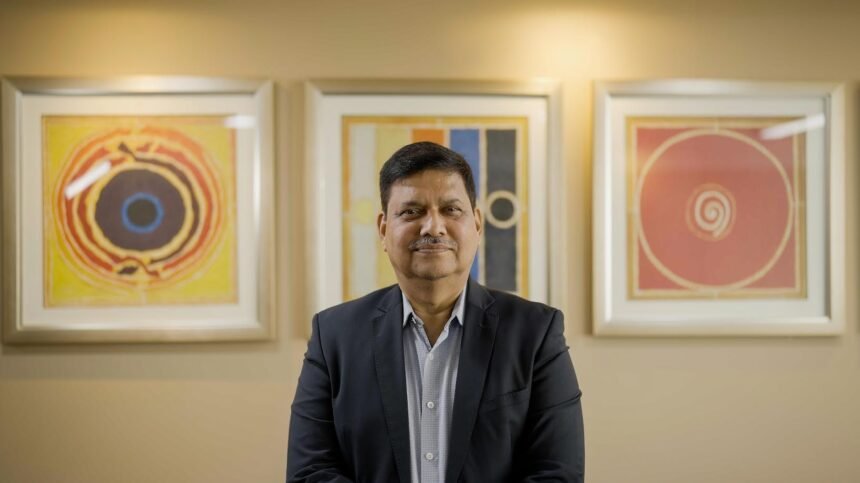
As India’s heavy-duty transport sector looks beyond diesel toward cleaner, more efficient fuel alternatives, LNG is emerging as a commercially viable transition pathway. At the forefront of this shift is INOX India’s cryogenic vehicle and mobility arm, INOXCVA, which has applied its deep expertise in ultra-low-temperature engineering to develop indigenous LNG fuel tank systems for commercial vehicles. In this conversation with Automobility, Deepak Acharya, Chief Executive Officer, INOX India Limited, discusses the technology, market readiness, and the strategic role LNG mobility can play in India’s energy transition.
Q: INOXCVA has a strong pedigree in cryogenic engineering. What core technical strengths were leveraged in developing the LNG fuel tank, and how does this solution distinguish itself in the Indian market?
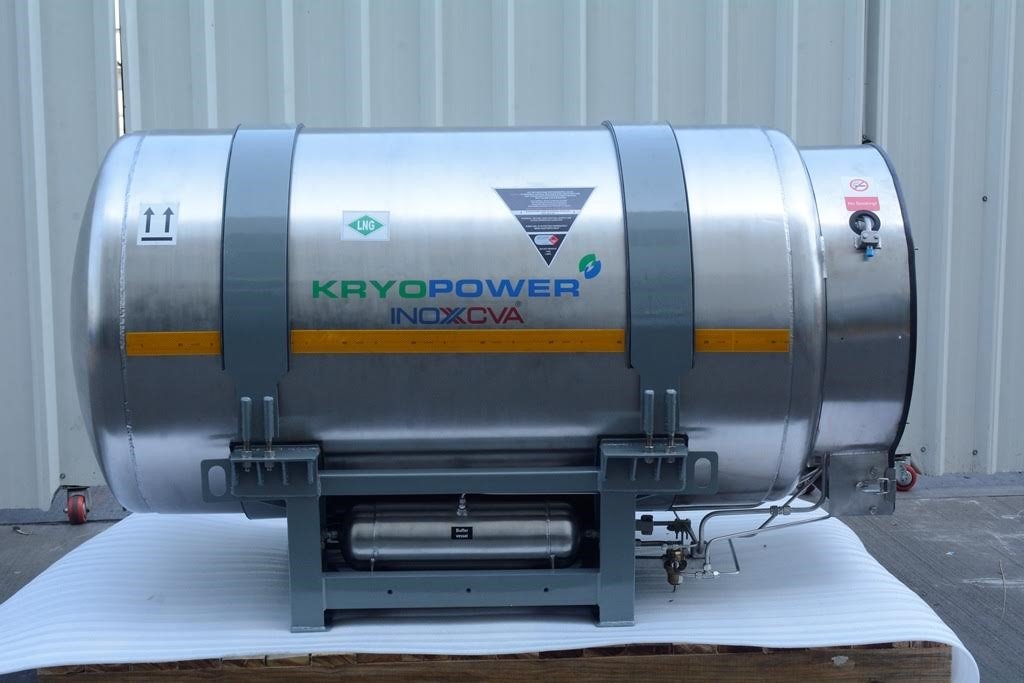
Our LNG fuel tank is built on decades of cryogenic engineering experience, spanning LNG storage, industrial gas systems, and customized equipment for energy infrastructure. Foundational technologies such as vacuum-insulated, double-walled, multi-layer super-insulation, thermal shielding, and precision fabrication—critical to cryogenic systems—have been adapted and refined for dynamic, on-vehicle automotive applications. Unlike solutions retrofitted from conventional fuels, this tank is engineered from a cryogenics-first perspective. This ensures superior thermal stability, lower evaporation losses, and robust structural strength under the varied driving and climatic conditions across India. The design philosophy reflects not only technical rigor, but also the practical expectations of Indian fleet operators who prioritize uptime and predictable performance.
Q: Which vehicle segments and applications are best suited for LNG fuel tanks, and how does INOXCVA cater to varying operational needs?
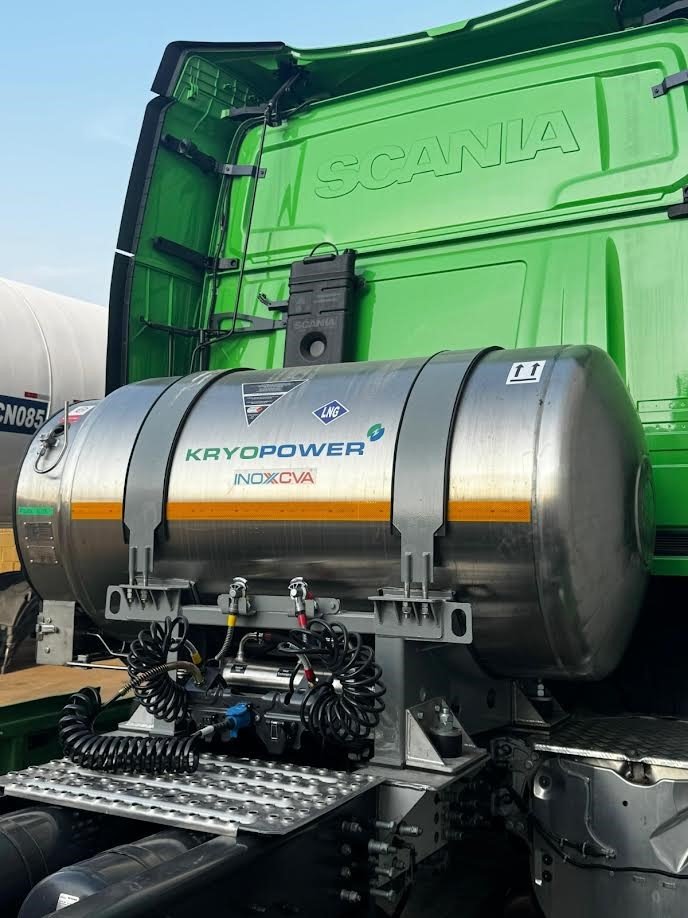
LNG fuel tanks are particularly well suited for medium- and heavy-duty commercial vehicles operating over long distances. These include tractor-trailers, bulk logistics vehicles, and fleet operations with high daily kilometre usage, where fuel efficiency and range are critical. INOXCVA offers the tank in multiple capacities and configurations to suit different vehicle layouts and operating profiles. This flexibility allows fleet operators and OEMs to integrate LNG without major compromises on payload, vehicle design, or operational efficiency. The aim is to make LNG adoption practical, not experimental, for Indian transporters.
Q: Safety and thermal efficiency are often cited as concerns with LNG transport. How does the tank’s design address these aspects, including boil-off gas management?
When you work within the cryogenic domain, safety and thermal control are core design imperatives, and not add-ons. The double-walled stainless-steel construction with dedicated vacuum insulation substantially reduces heat ingress, which in turn limits LNG evaporation during storage and transit. In terms of safety, the system integrates multiple pressure-relief layers, engineered valves, and vibration-tolerant mounts to handle real-world road stresses such as braking forces and uneven surfaces. Boil-off gas is managed by controlled pressure equilibrium within defined operating parameters, curbing the need for frequent venting and maintaining fuel availability over longer duty cycles. This combination of features ensures stable, safe cryogenic operation across diverse operating environments.
Q: How are fleet economics, consumption patterns, and customer expectations shaping demand for LNG-based systems in the transport sector?
Fleet operators are increasingly evaluating fuel alternatives through the lens of total cost of ownership, not just upfront system cost. Stable fuel pricing, extended range per fill, predictable maintenance intervals, and maximised uptime are decisive factors, particularly for high utilisation fleets. At the same time, customer behaviour in India is evolving; early adopters are validating performance under local conditions, which builds wider market confidence. As LNG’s operational and economic benefits become clearer, demand is likely to strengthen both among private fleets and public-sector logistics players.
Q: What level of manufacturing capacity has INOXCVA created for LNG fuel tanks, and how scalable is this as demand grows in India?
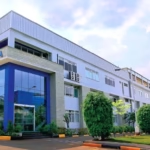
INOXCVA has established dedicated production capabilities for LNG fuel tanks within its existing cryogenic manufacturing infrastructure. This includes specialised welding, vacuum insulation processes, rigorous testing protocols, and in-house quality assurance systems. INOX India’s facility is approved by IATF 16949 Automotive Quality standard to supply consistent quality products to our customers. The current capacity is aligned with early-stage market requirements while maintaining strict quality and safety benchmarks. Importantly, the manufacturing setup has been designed with scalability in mind. As LNG adoption accelerates—driven by fleet conversions, OEM partnerships, and infrastructure growth—we can ramp up production in a phased and disciplined manner without compromising on reliability or delivery timelines. We have already envisaged an annual capacity expansion from the current 3,000 tanks to 30,000 tanks, in view of the anticipated demand.
Q: There is fresh optimism around global LNG supply and prices. How does this broader market context influence LNG mobility prospects in India?
Recent industry forecasts anticipate a significant offtake in global LNG supply in 2026, driven by capacity additions in major export hubs such as the U.S. and Qatar. This is expected to lift global output by as much as 10% year-on-year, easing tight market conditions seen in recent years and exerting downward pressure on Asian LNG spot prices. For India, which is both a major LNG importer and a price-sensitive market, this shift is highly relevant. Easing prices improve the economics of imported LNG relative to alternatives and can unlock incremental demand—both for power and industrial use, and increasingly for mobility applications. Lower LNG costs narrow the total cost of ownership gap for long-haul transporters considering LNG as a fuel choice. This could accelerate conversion interest and help catalyse broader ecosystem development.
Q: From a policy and transition perspective, where does LNG mobility fit in India’s broader energy roadmap over the next decade?
LNG mobility should be viewed as a pragmatic transitional pathway. It enables a significant reduction in local pollutants and carbon intensity relative to diesel, while leveraging existing internal combustion technologies and infrastructure. At a time when India is balancing rapid economic growth with ambitious sustainability commitments, LNG offers a tangible bridge fuel that can be integrated at scale. With supportive policy frameworks, expanding infrastructure and favourable supply-side trends, LNG can play a pivotal role in India’s transport energy mix, complementing longer-term shifts to electrification and hydrogen. It is not an ultimate destination, but a meaningful and scalable step in the energy transition.