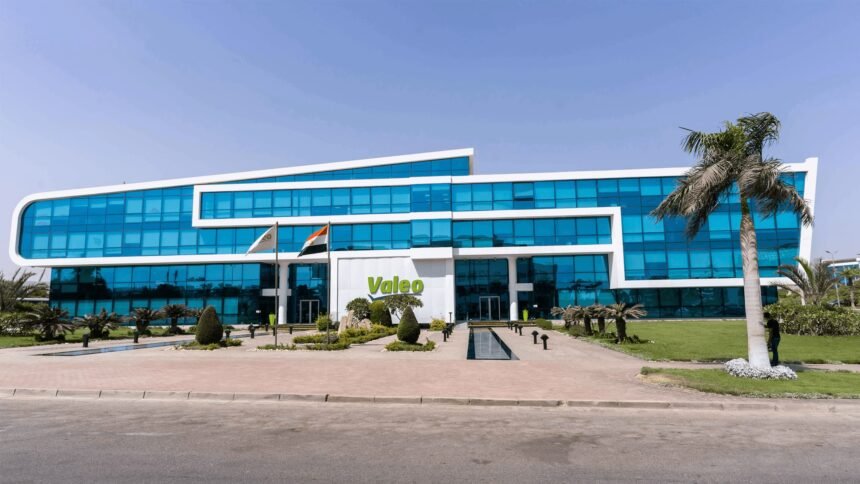
Paris, France: Valeo has laid out a clear roadmap for the next phase of its transformation, unveiling its “Elevate 2028” plan during its Capital Markets Day in Paris. The automotive technology group aims to strengthen its financial fundamentals, return to sustained sales growth and reinforce its global leadership in electrified, safer and software-defined mobility.
The strategy builds on the foundations of its ongoing Move Up plan, which began in 2022 and has already delivered improvements in profitability and cash generation. With Elevate 2028, Valeo expects to accelerate those gains. The company is targeting sales of 22–24 billion euros in 2028, an operating margin of 6–7 percent and free cash flow after net financial interest of more than 500 million euros. By the same year, Valeo plans to bring its leverage ratio below one time adjusted EBITDA, a level consistent with securing an investment-grade credit rating.
Chief Executive Officer Christophe Perillat said the group is ready for the next phase of its growth story. He credited the Move Up plan for sharpening Valeo’s technological position and improving its financial profile, and said the new plan would push those gains further. According to him, Valeo’s trajectory will be driven by what he calls three “engines”: steady improvement in profit, higher cash generation starting in 2025 and a return to sales growth from 2027. Perillat highlighted 2025 as a pivotal year that marks the structural shift of Valeo’s business model toward stronger cash generation. He also emphasized the role of the company’s global workforce. “Our teams have carried us through a demanding few years with commitment and courage,” he said. “Their agility and expertise will continue to drive innovation and excellence for our customers.”
Profitability Trends Point Upward
The first focus area of Elevate 2028 is sustained improvement in group profit. Valeo expects gross margin to remain above 19 percent of sales, supported by stronger industrial performance and wider use of artificial intelligence and robotics in its factories. The group has already implemented most of the one-off self-help measures announced earlier at a total cost of 400 million euros. These measures are expected to deliver 300 million euros in annualized savings from 2026 onward. Valeo expects recurring costs associated with these initiatives to settle at around 100 million euros annually. These actions, combined with continued operational discipline, will add around 1.1 percentage points to the company’s operating margin between 2024 and 2028. Valeo posted an operating margin of 4.3 percent in 2024. For 2025, it reaffirmed its guidance range of 4.5 to 5.5 percent. By 2028, the company expects to reach 6 to 7 percent, marking a steady and uninterrupted climb over a six-year period.
Cash Generation Strengthens
The second pillar of the strategy is robust and sustainable cash generation. Valeo expects 2025 to mark a turning point, with free cash flow before one-off restructuring costs and interest projected at a record 700 million euros or more. This figure translates to slightly above 550 million euros after one-off costs and before interest. Under the company’s new financial definition — which now includes net financial interest — free cash flow should exceed 300 million euros in 2025. By 2028, free cash flow under the revised definition is expected to surpass 500 million euros. Part of this improvement will stem from lower capital expenditure. Valeo plans to keep CAPEX in the 4.5–5 percent range of sales, and it also expects gross R&D investment to fall by about 200 million euros in 2025 versus 2024.
The group has leaned heavily into artificial intelligence to improve R&D productivity. All software engineers now use generative AI tools, and a quarter of Valeo’s certified automotive code is AI-generated — a jump from zero just 16 months ago. This shift allows the company to maintain a strong pace of innovation while spending more efficiently. The company also confirmed its ambition to regain an investment-grade rating by 2028, relying on organic cash generation and a gradual increase in dividends. The financial plan does not factor in acquisitions or disposals, though Valeo says any potential deal would be assessed strictly on value creation and balance sheet impact.
Sales Growth to Restart in 2027
The third engine of the Elevate 2028 plan is a return to top-line growth. Valeo expects 2026 sales to be broadly flat, but from 2027 onward, its strong order book should begin to convert into revenue as major contracts awarded between 2022 and 2025 enter production. The company has secured cumulative orders representing 1.4 times its OEM sales during that period, with a notable shift toward larger and multi-model contracts that carry longer ramp-up periods but more durable revenue. The distribution of recent orders underscores where Valeo sees its future value: 40 percent BRAIN (ADAS, software, sensors and interior systems), 35 percent POWER (electrified components and powertrains) and 25 percent LIGHT (lighting and visibility systems).
Divisions Positioned for Growth
Valeo said its three major divisions — POWER, BRAIN and LIGHT — will drive its growth through technologies that address the global shift toward cleaner, safer and smarter vehicles. POWER, which covers electric powertrain systems, is expecting significant growth as electrification accelerates despite some market delays. New Energy Vehicles represented 20 percent of global sales in 2024 and are projected to climb to 37 percent in 2028 and 43 percent in 2030. This trend increases Valeo’s value per vehicle and will help raise the division’s contribution. POWER expects sales to rise from 10.5 billion euros in 2024 to between 10.5 and 11.5 billion euros in 2028. Operating margin is forecast to increase from 2.9 percent to between 5 and 6 percent.
The division’s strongest momentum is in China, where Valeo secured orders equivalent to three times its sales. That pipeline is expected to fuel a 40 percent sales increase between 2024 and 2028 in the Chinese market alone. BRAIN, which focuses on ADAS, computing platforms, interior systems and software, is also set for strong growth as advanced driver assistance becomes standard across more vehicle segments. Valeo expects 62 percent of cars in 2028 to feature Level 2, 2+ or 2++ capabilities, up from 46 percent in 2024. The division is deepening ties with major technology partners, including Mobileye, Qualcomm and Momenta. BRAIN aims to lift its sales from 5 billion euros in 2024 to 6–7 billion euros in 2028, and to increase operating margin from 5.8 percent to 7–8 percent.
LIGHT remains the global leader in automotive lighting technology and is positioned to benefit from a 30 percent increase in value contribution per vehicle between 2024 and 2030. The company’s accelerated development cycles in China are helping convert large order wins into sales more quickly. LIGHT expects to reach 5.5–6.5 billion euros in sales in 2028, up from 5.5 billion euros in 2024, and targets a rise in operating margin from 5.5 percent to 6–7 percent. Beyond its three core divisions, Valeo Service is evolving into a broader services and solutions provider. The company is also tapping opportunities in new mobility categories such as e-bikes, two-wheelers, light electric cars, as well as in emerging areas such as data center cooling, agriculture and defense.
Geographic Focus: China, India and North America
Valeo plans to strengthen its presence in key markets with rising technological demand. China remains a strategic priority, with the company calling it a “fitness center” for global competitiveness. After a flat period, Valeo expects growth to resume in the second half of 2026 and accelerate in 2027. In India, a rapidly transforming market, Valeo anticipates its sales will triple from 220 million euros in 2024 to about 700 million euros in 2028. The company also expects faster growth in North America than the group average, driven by strong relationships with automakers and tech partners.
Sustainability Leadership
Valeo reiterated its strong performance in global sustainability rankings. The group maintains top ratings from MSCI, CDP and Sustainalytics, and remains included in major ESG indices. It is also progressing toward its CAP 50 plan, targeting Net Zero by 2050. In 2025, the group expects to report 40 million tonnes of CO₂ equivalent emissions, well below its SBTi-aligned target of 45.3 million tonnes.
Looking to 2028
Valeo’s Elevate 2028 plan sets a clear financial trajectory: stronger margins, robust cash flow, renewed growth and a solid balance sheet. With a strong order pipeline and an expanding foothold in fast-growing markets, the group is aiming to position itself as one of the key technology leaders shaping the future of mobility.