Gandhinagar: The 27th SAFE Annual Convention, organised by the Society for Automotive Fitness & Environment (SAFE), an initiative of the Society of Indian Automobile Manufacturers (SIAM), brought together policymakers, industry representatives and road safety experts here on Friday to discuss measures for reducing road accidents and strengthening safety practices across India’s mobility ecosystem.
Held under the Safe Journey (सुरक्षित सफर) initiative in association with the Transport Department and Gujarat Road Safety Authority, Government of Gujarat, the convention was themed “Safe Journey: A Collective Journey Towards Safety with Responsibility”.
The event focused on responsible road use, data-driven enforcement, vehicle and road engineering, behavioural education and collaboration among stakeholders to improve road safety.
Gujarat Minister of State for Forests and Environment, Climate Change and Transport Pravin Gordhanji Mali, who was the chief guest, said building a culture of respect on roads was essential to reducing fatalities.
“Awareness, behaviour and civic sense are just as important as technology in improving road safety,” he said.
Secretary of the Roads and Buildings Department, Gujarat, P R Patelia said the diversity of vehicles and road users in India created complex traffic conditions and called for innovative solutions through collaboration.
Commissioner of the Gujarat Road Safety Authority Satish Patel said road safety was a major challenge that required sustained efforts from all stakeholders.
Superintendent of Police, Gujarat, Sahitya V said road safety initiatives must also focus on people outside vehicles, including pedestrians and other vulnerable road users, and called for technology that could help protect them.
President of SAFE and Executive Officer of Maruti Suzuki India Alok Jaitley said India’s growth aspirations required a mobility ecosystem that was safe, responsible, efficient and environmentally sustainable.
“Road safety is a shared responsibility. Only when the efforts of all stakeholders come together can we move from individual interventions to an integrated road safety ecosystem,” he said.
SAFE Vice President and Senior Director of Honda Motorcycle & Scooter India Vinay Dhingra said the automotive industry’s road safety efforts included safer vehicle technologies, advanced safety standards, rider and driver training and community initiatives.
“Our task is to convert dialogue into action, partnerships into projects, and intent into measurable improvement,” he said.
During the inaugural session, themed “A Systems Approach to Road Safety in India”, the SIAM-SAFE context paper, “Analysing India’s Imperatives for Road Safety”, was unveiled by Minister Mali.
The minister also launched the HMSI-Gujarat Road Safety Authority Road Safety Project in Ahmedabad and the NID-Gujarat Road Safety Authority Road Safety Awareness Project in Gandhinagar.
Twelve road safety warriors from Gujarat were honoured during the convention for their contributions towards promoting road safety.
The minister inaugurated the Sustainable Mobility Expo, which showcased 10 vehicles from leading automobile manufacturers and a VECV eye check-up van. The participating companies included Hero MotoCorp, Honda Motorcycle & Scooter India, TVS, Mahindra & Mahindra, Skoda, Ashok Leyland/Switch, Maruti Suzuki India and VE Commercial Vehicles.
The vehicles on display covered two-wheelers, three-wheelers, passenger cars and commercial vehicles, highlighting developments in sustainable mobility and road safety.
Addressing the inaugural session, SIAM Executive Director (Technical) Atanu Ganguli said vehicle safety, road infrastructure and responsible behaviour needed to work together to improve road safety.
“The safest vehicle is not a substitute for the safest road, and the safest road cannot compensate indefinitely for unsafe behaviour. We need all three,” he said.
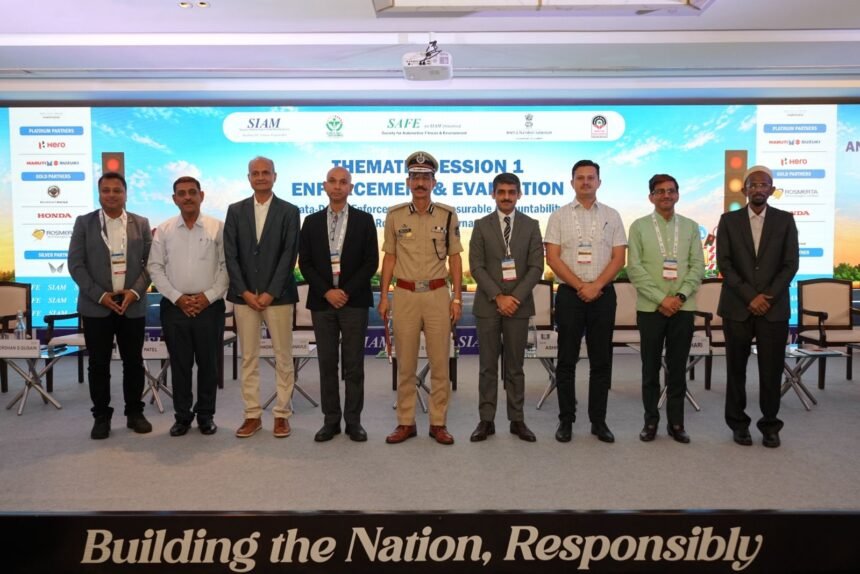
The first thematic session, “Enforcement & Evaluation: Data-Driven Enforcement and Measurable Accountability in Road Safety Governance”, examined the use of data and technology to strengthen enforcement and improve accountability.
The session was moderated by Ashim Sharma, Senior Partner and Group Head at NRI, and chaired by SAFE Treasurer and Executive Vice President of VE Commercial Vehicles Bhagwan K Bindiganavile.
Presentations were made by Sharma on India’s road safety ecosystem, J J Chaudhari, Deputy Director, Transport Department, Gujarat, Amrit Choudhary, CEO and Founder of Parking Bot, on intelligent parking management, and Sudershan S Gusain, Chairman of the Tyre Safety Awareness Group of the Automotive Tyre Manufacturers Association, on tyre safety.
The panel included Gujarat Director General and Inspector General of Police G S Malik, Gujarat Road Safety Authority Commissioner Satish Patel, Work with Dignity Foundation CEO and Founder and BARS Chairperson Ramashankar Pandey, and Murtuza Shabbir Painter, Project Head of RASSI/JPRI.
Malik said data and artificial intelligence should be used not only for enforcement but also for better planning and evaluation of road safety measures.
“Every step that we take in this AI-enabled ecosystem should be grounded in data and every improvement should be visible on our roads,” he said, adding that Gujarat had significantly increased enforcement over the past two years.
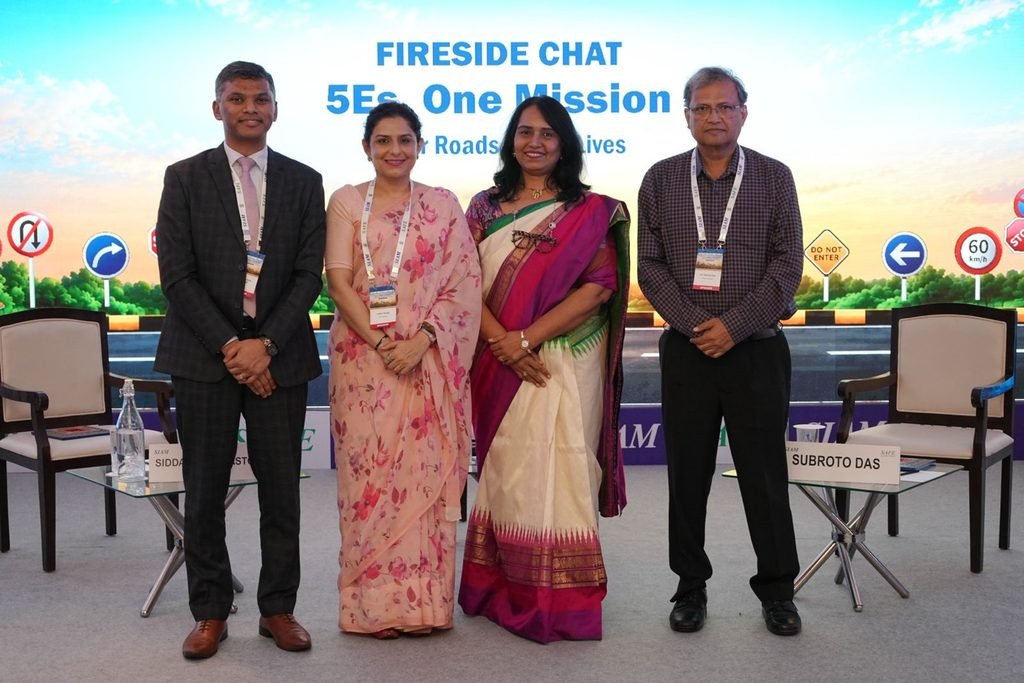
A fireside chat titled “5Es, One Mission: Safer Roads, Safer Lives” discussed the five pillars of road safety: Education, Engineering, Enforcement, Emergency Care and Evaluation.
The discussion was moderated by Latika Taneja, Head of Corporate Communications, Corporate Affairs and CSR at Hero MotoCorp, and featured Professor Siddartha Khastgir, Head of Safe Autonomy at WMG, University of Warwick, UK, and Dr Subroto Das, Founder, CEO and Managing Trustee of Lifeline Foundation.
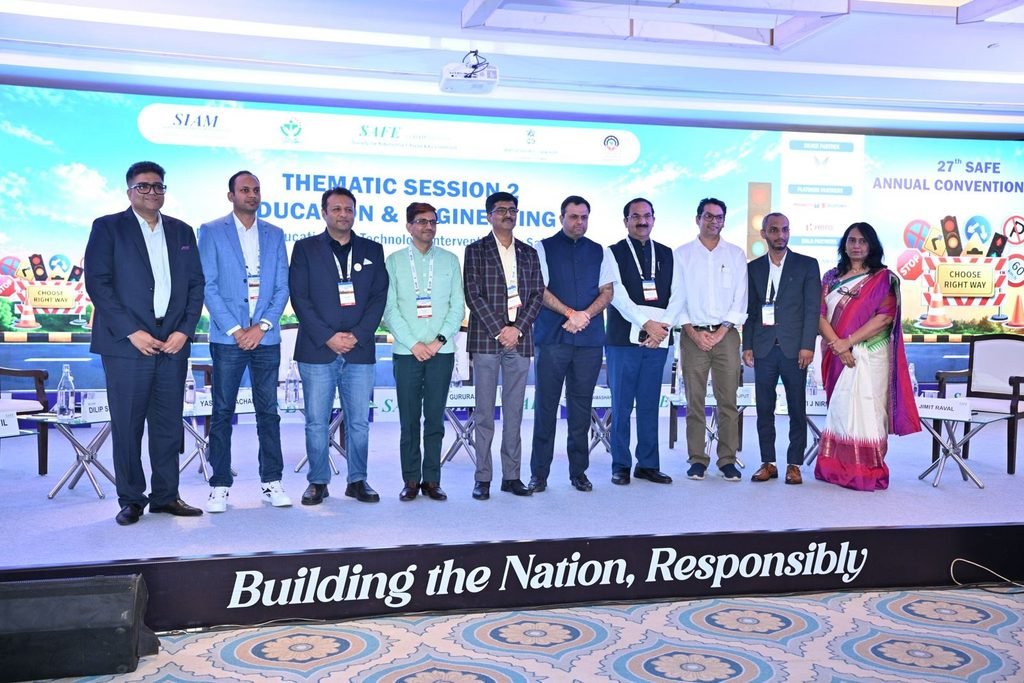
The second thematic session, “Education & Engineering: Behavioral Education and Technology Interventions for Safer Roads”, focused on behavioural education, technological solutions and vehicle and infrastructure design to promote safer road use.
The session was moderated by WAF Group Founder and CEO Anuj Guglani and chaired by Maruti Suzuki India Vice President Gururaj Ravi.
Presentations were made by Samved Patil, Partner, Grant Thornton, Dilip Shrivastava, Head of Mechatronics, Product Engineering, Daimler India Commercial Vehicles, and Jimit Raval, Director and Co-Founder of Nexgits.
The panel included GSRTC Secretary Ravi J Nirmal, NID Gandhinagar Campus Dean and NDBI CEO-in-Charge Jitendra Singh Rajput, CRRI Senior Principal Scientist Mukti Advani and Ashok Leyland Senior Vice President Yashpal Sachar.
The discussions covered the role of road design, technology, public transport operations and behavioural interventions in improving road safety.
SAFE said the convention reinforced its commitment to working with government, industry and other stakeholders to promote safer, cleaner and sustainable mobility in India.
Through its initiatives, SIAM and its members support the adoption of new technologies, alternative fuels, responsible road use and sustainable practices, in line with its vision of “Building the Nation, Responsibly”.